 Image 1 of 3
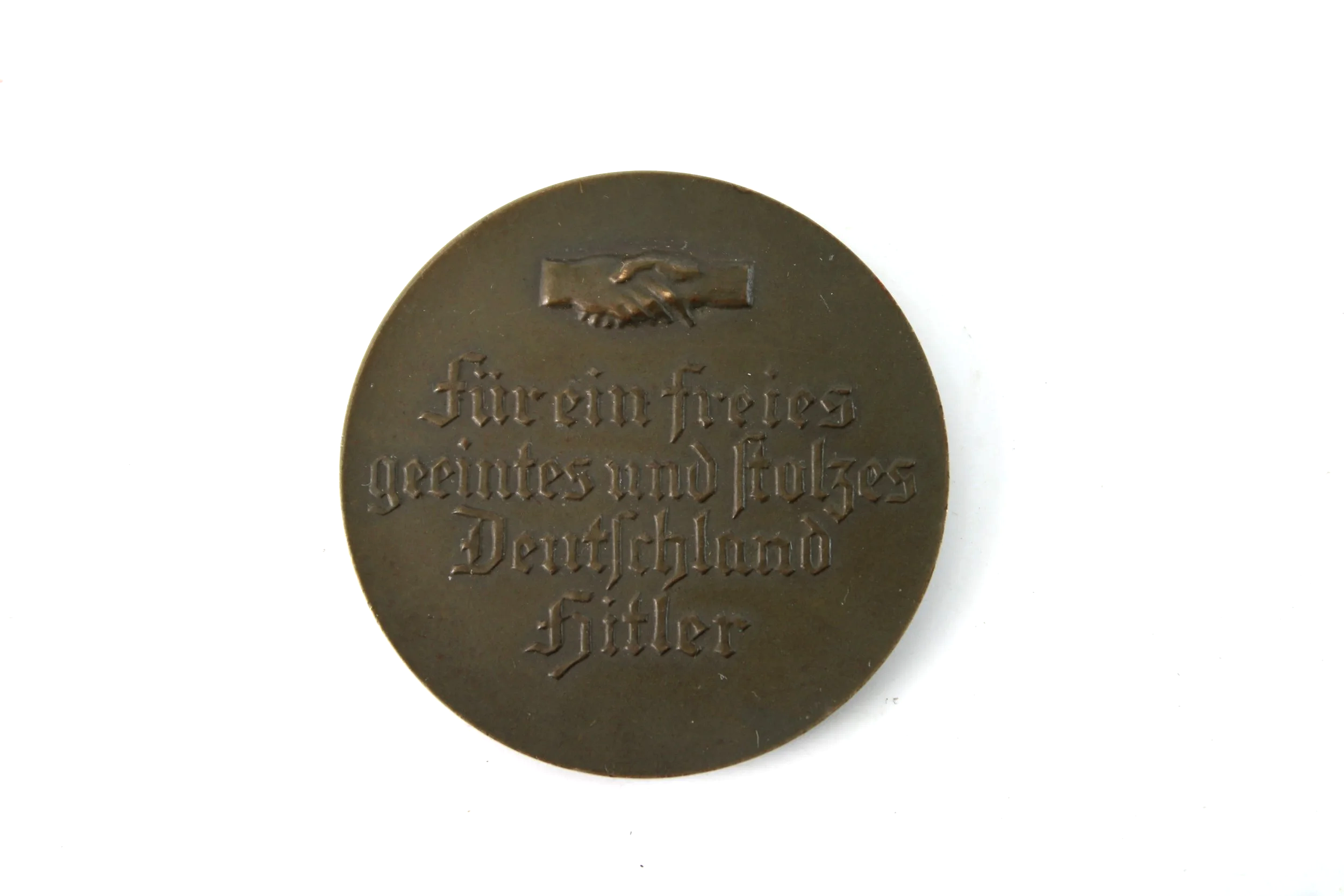 Image 2 of 3
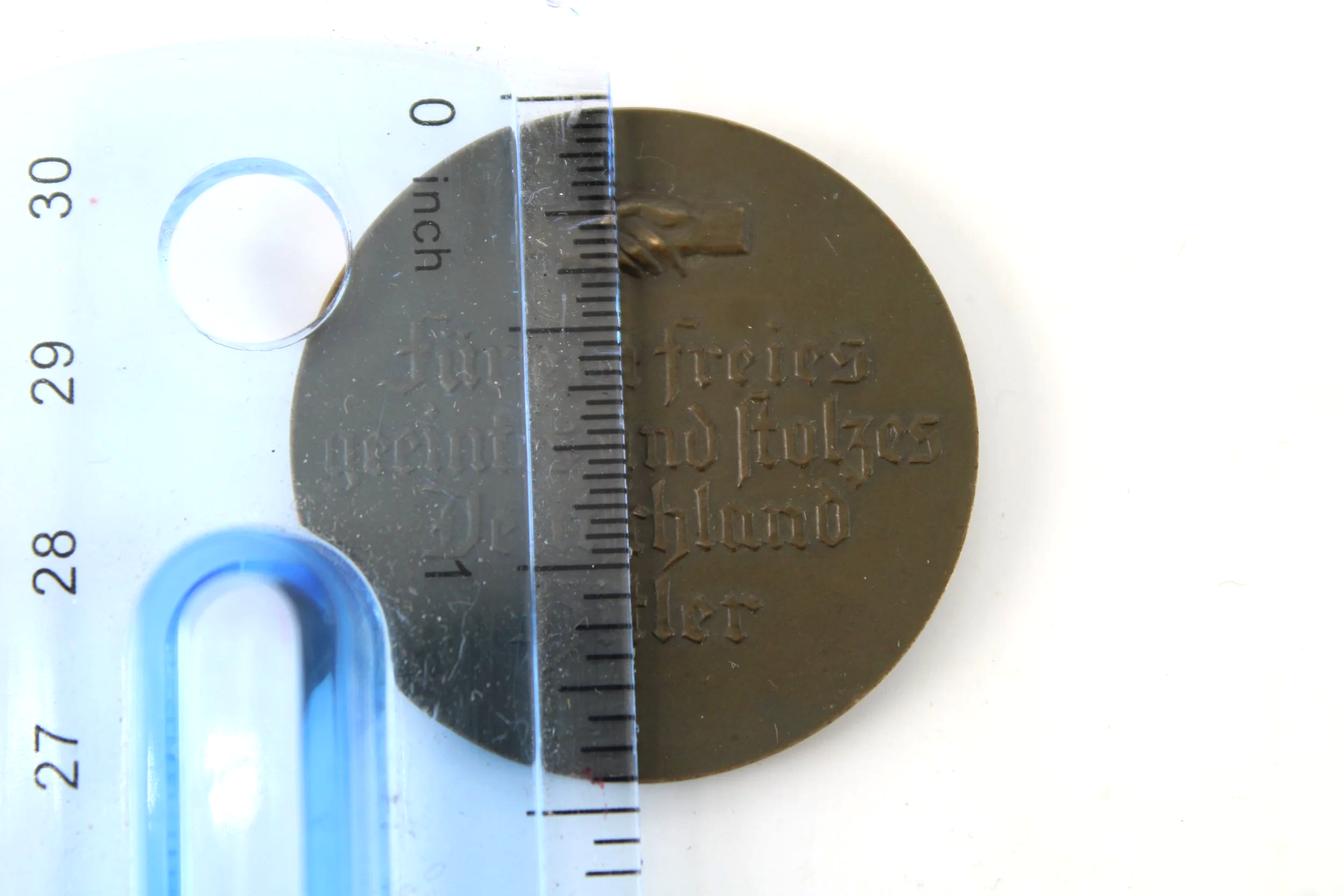 Image 3 of 3
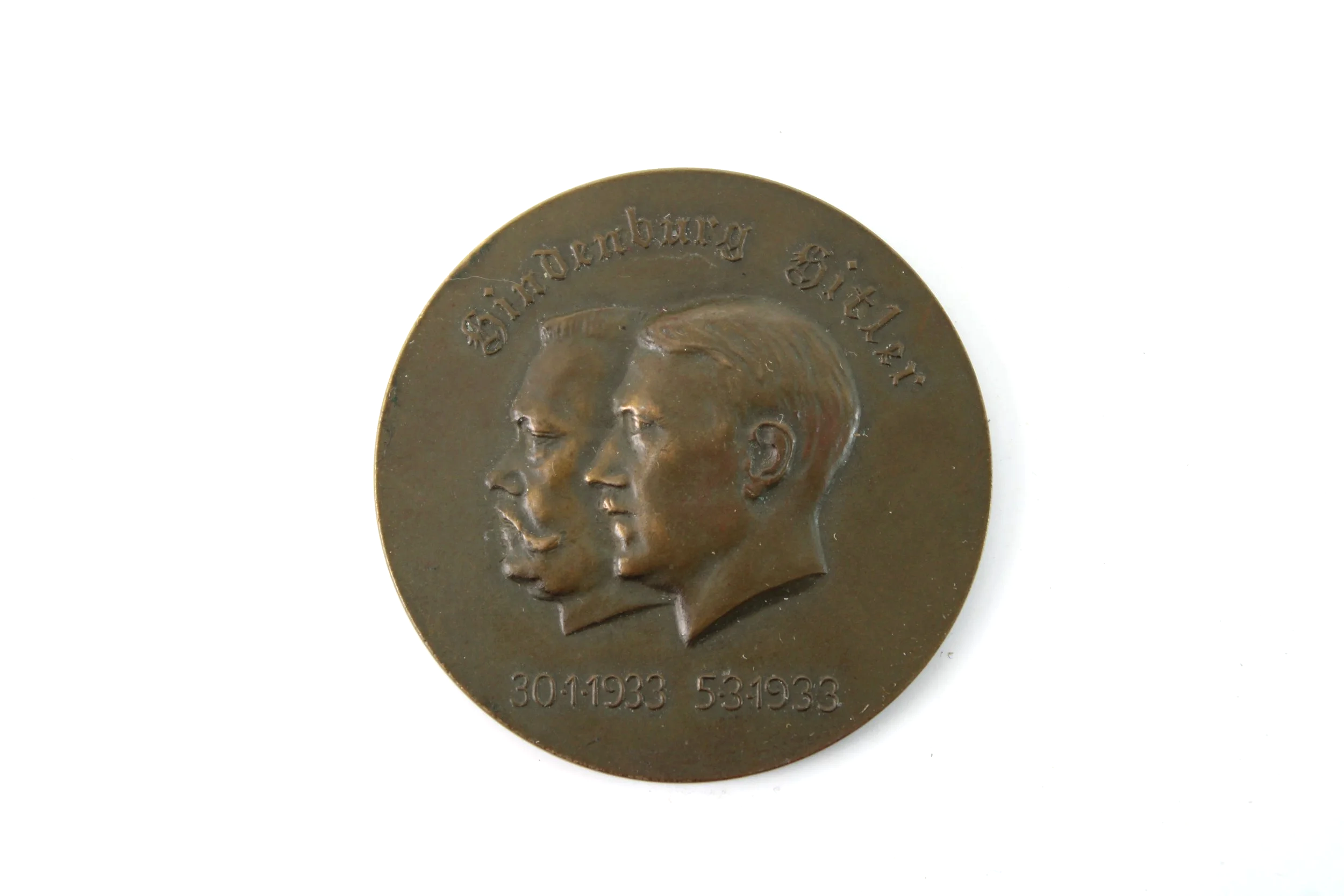
Hindenburg Hitler medallion. The reverse reads “Für ein freies, geeintes und stolzes Deutschland” — translated, “for a free, united, and proud Germany — Hitler.” Bronze, 30 mm. A 1933 patinated bronze commemorative medallion from the early Third Reich period that features the profile portraits of Paul von Hindenburg and Adolf Hitler.
Obverse design: Displays overlapping busts of Hindenburg and Hitler with the inscription "Hindenburg Hitler" above and the key political dates "30.1.1933" (Hitler’s appointment as Chancellor) and "5.3.1933" (the German federal election) below, clearly marking the pivotal moments of that year.
Reverse context: Typically depicts clasped hands beneath the nationalist slogan "Für ein freies, geeintes und stolzes Deutschland" (For a free, united, and proud Germany), emphasizing the message of unity promoted at the time.
Historical purpose: Struck as a propaganda piece by the NSDAP to symbolize the political alliance and the transition of power between the aging Reich President and the incoming Chancellor, and intended for distribution to reinforce the narrative of legitimate succession and national renewal.
Hindenburg Hitler medallion. The reverse reads “Für ein freies, geeintes und stolzes Deutschland” — translated, “for a free, united, and proud Germany — Hitler.” Bronze, 30 mm. A 1933 patinated bronze commemorative medallion from the early Third Reich period that features the profile portraits of Paul von Hindenburg and Adolf Hitler.
Obverse design: Displays overlapping busts of Hindenburg and Hitler with the inscription "Hindenburg Hitler" above and the key political dates "30.1.1933" (Hitler’s appointment as Chancellor) and "5.3.1933" (the German federal election) below, clearly marking the pivotal moments of that year.
Reverse context: Typically depicts clasped hands beneath the nationalist slogan "Für ein freies, geeintes und stolzes Deutschland" (For a free, united, and proud Germany), emphasizing the message of unity promoted at the time.
Historical purpose: Struck as a propaganda piece by the NSDAP to symbolize the political alliance and the transition of power between the aging Reich President and the incoming Chancellor, and intended for distribution to reinforce the narrative of legitimate succession and national renewal.